Contents · 7 sections
Our work brings together glass manufacturing, customised product development, quality assurance and integrated hospitality bottling solutions.
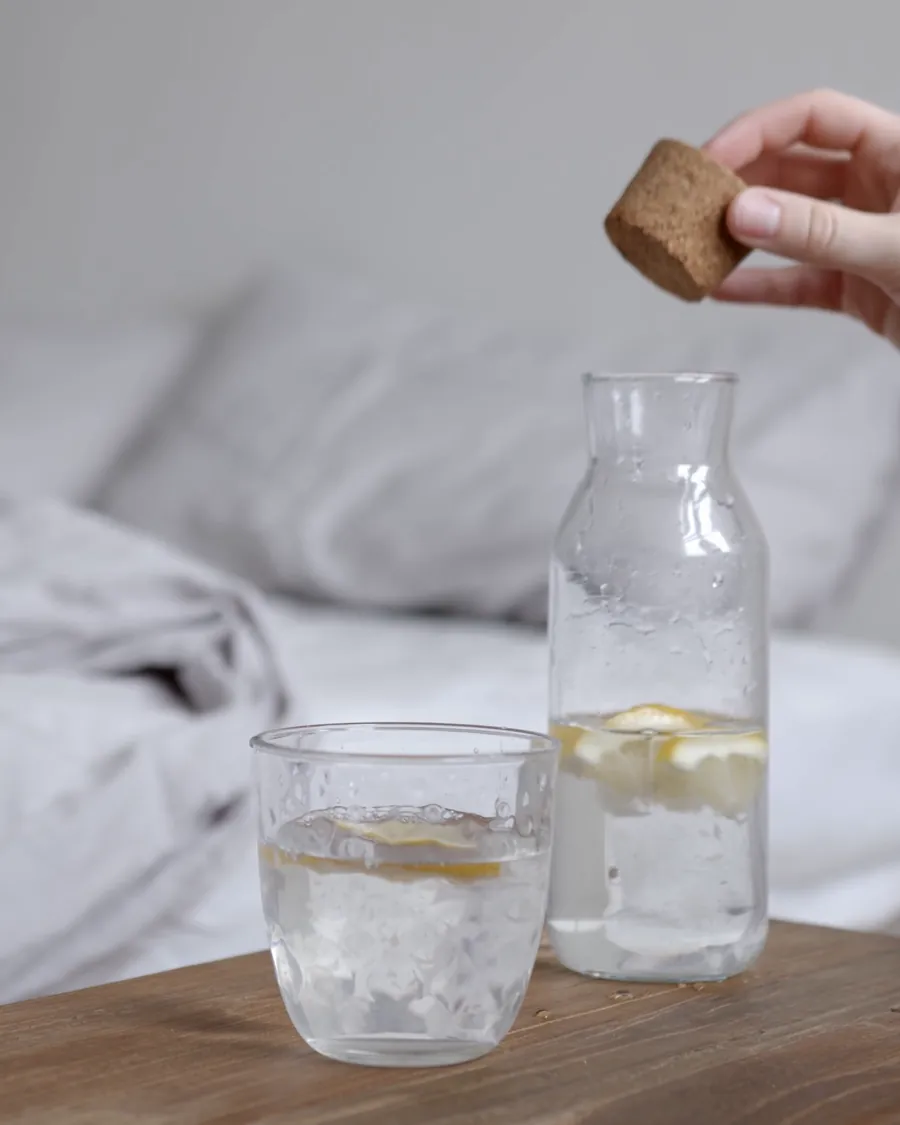
Our ambition is to help hotels move from single-use plastic to refillable glass, with bottles, closures and on-site bottling made to work together.
Guest experience. Redefined.
01. Our capacity in numbers
200 tonnes
Of glass a day
Our plant has a production capacity of 200 tonnes of glass a day, in both flint and super flint glass.
Flint is our clear glass; super flint is its extra-clear version, for bottles and glassware where brilliance matters most.
Since 1993. More than thirty years of glassmaking, now serving hotel groups, resorts and beverage brands.
Manufacturing and product capabilities
| Area | Our capabilities |
|---|---|
| Glass packaging | Bottles for hospitality, food and beverages |
| Custom development | In-house mould development and product customisation |
| Glassware | Drinking glasses, tableware and serving products |
| Product decoration | Ceramic printing, decorative finishes and custom branding |
| Hospitality systems | Glass water bottles, closures and integrated bottling equipment |
| Quality management | Product-specific manufacturing inspections and performance testing |
Glass bottles & closuresHospitality glasswareGlass decorationWater bottling plants
02. Our sustainability philosophy
We organise our approach around two principles.
Design for continued use.
Develop products suitable for their intended applications, including refillable glass packaging where appropriate.
Maintain product quality.
Use product-specific inspection and testing to support reliable performance and reduce avoidable quality-related rejection.
03. Why glass is better than plastic
Single-use plastic is one of the defining environmental problems of our time. Glass gives hotels a better way to serve water: one bottle, filled, served, washed and filled again.
The problem
Single-use plastic
- Only about 9% of all the plastic ever made has been recycled. Most of the rest is in landfill or loose in the environment.
- Single-use plastic makes up around half of the litter found on Europe’s beaches.
- It does not biodegrade. It breaks into smaller and smaller pieces, and microplastics have now been found as high as Mount Everest.
The answer
Glass
- Reusable. A glass bottle can be washed and refilled again and again.
- Endlessly recyclable. Glass can be recycled without any loss of quality, and every tonne recycled saves about 1.2 tonnes of raw materials.
- Pure. Glass is inert and non-porous. It adds nothing to the water and contains no BPA.
- Premium. It looks and feels like the quality guests expect, and keeps water tasting as it should.
Reduce, reuse, recycle
Reduce
Every refill is one less plastic bottle bought, shipped and thrown away.
Reuse
The same bottle returns to the room, the table and the bar, day after day.
Recycle
At the end of its life, a glass bottle can be melted down to make new glass.
The goals it serves
Choosing refillable glass over single-use plastic supports four of the United Nations Sustainable Development Goals.
- 12Responsible consumption and production
- 13Climate action
- 14Life below water
- 15Life on land
04. Glass and the circular economy
Glass is made for a circular economy. A bottle can be refilled many times in service and, at the end of its life, recycled into new glass.
A well-run refill programme spreads the effort of making each bottle across many fills, and keeps single-use packaging out of the hotel altogether.
- 1FillOn site, from the property’s own bottling plant.
- 2ServeIn the room, at the table, by the pool.
- 3CollectReturned in crates with housekeeping.
- 4WashCleaned and inspected for the next round.
- 5RefillBack into service, again and again.
We believe circularity is built with practical systems, not product descriptions alone.
05. Supporting responsible hospitality
Hotels and resorts have a real opportunity to rethink how drinking water is packaged and served to guests.
Through our glass water bottles, compatible closures and bottling systems, Jagrat gives hospitality businesses everything they need to fill water on site and serve it in reusable glass.
A well-run system reduces dependence on bought-in single-use bottled water, and with it the transport, packaging and waste that come with it.
Every property starts from its own operations.
We help each one set up its programme and keep track of what matters:
- Plastic bottles no longer bought.
- Glass bottles in circulation.
- Refills served, week by week.
- Washing, filling and handling routines.
Our role
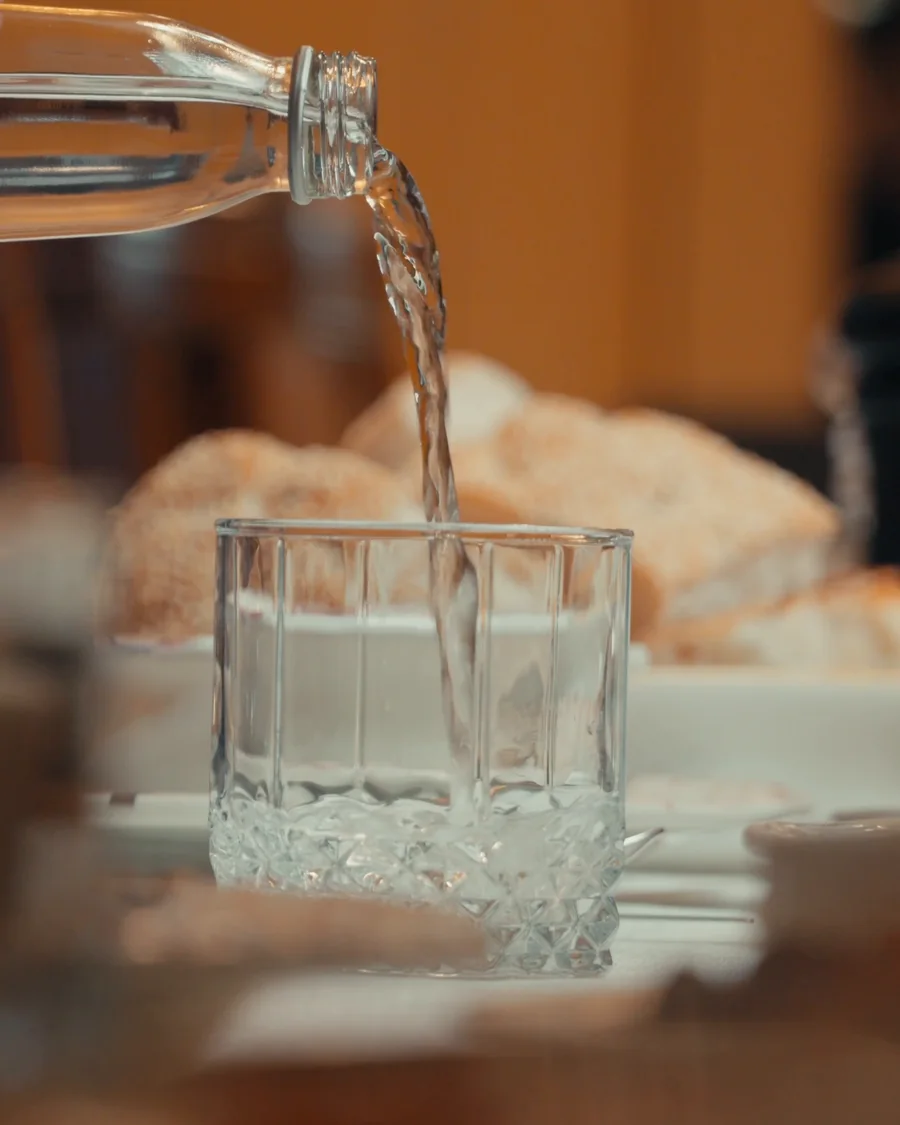
We supply the complete system, from bottles and closures to the bottling plant, and help each property put it to work.
06. Quality and responsible product development
A bottle that is meant to be refilled again and again has to be made right.
Consistent dimensions, careful annealing and a precise closure fit matter most where glass is handled and filled every day.
Our quality checks include:
- Annealing and stress inspection.
- Dimension and wall-thickness checks.
- Thermal-shock testing.
- Closure fit and compatibility.
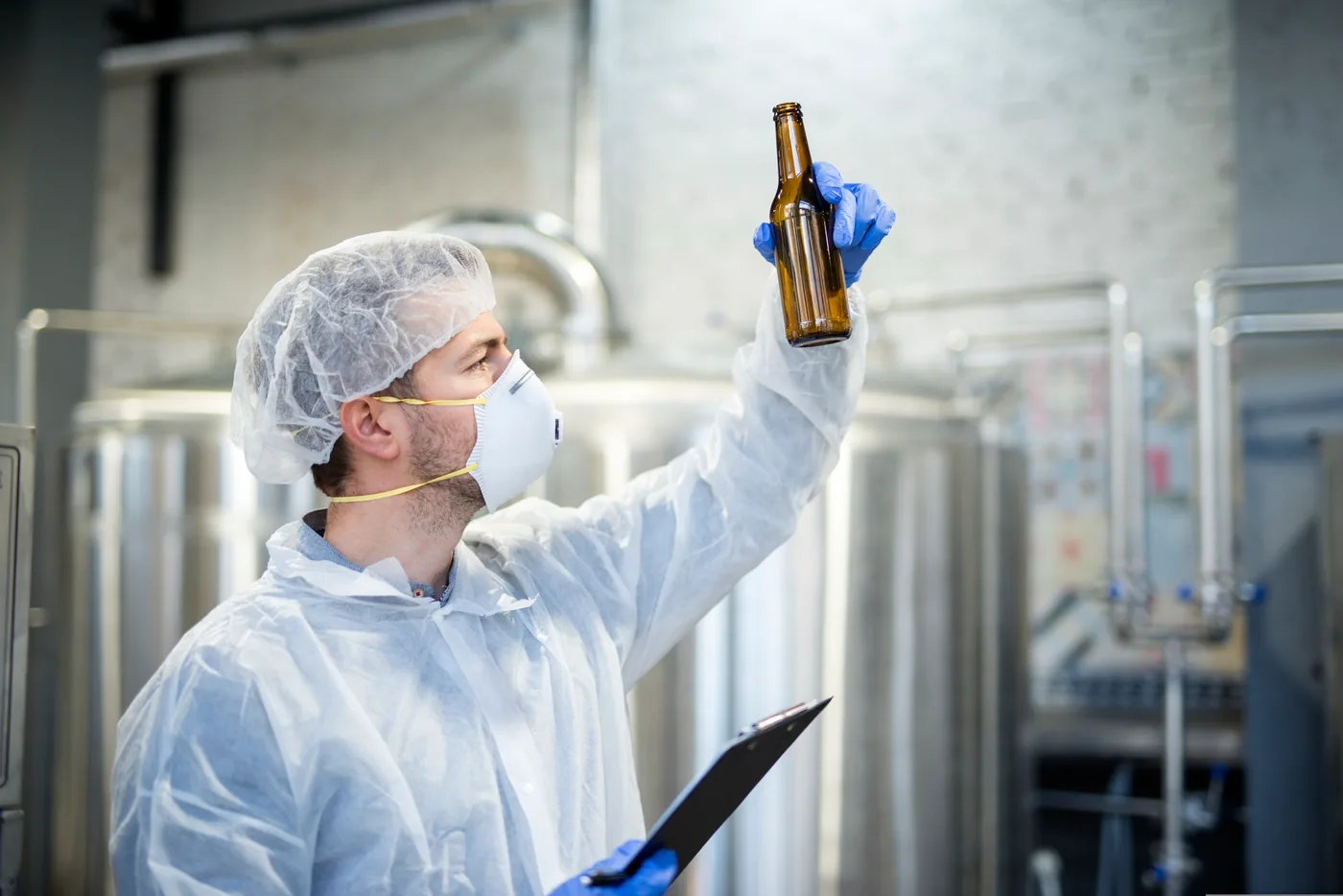
We consider reliable product development the foundation of responsible glass packaging.
07. Our commitment
We will keep making glass that lasts, and keep helping hotels replace single-use plastic with it.
Every property that fills its own water in glass takes a step its guests can see. We are proud to build the bottles, closures and plants that make that step possible, and we will keep sharing what our customers achieve as their programmes grow.
The future of hospitality is refillable, and it is made of glass.
Sources
- UN Environment Programme — Single-use plastics: a roadmap for sustainabilityunep.org
- European Commission — Single-use plasticsec.europa.eu
- Napper et al., One Earth (2020) — Microplastics on Mount Everestdoi.org
- FEVE, the European Container Glass Federation — Glass recyclingglassonline.com
- United Nations — The Sustainable Development Goalssdgs.un.org
JAGRAT & COGuest experience. Redefined.